
Annual Surveys


Benefits, Employee Experience, and Structure Survey Methodology, 2025-26
The data collection period for CUPA-HR’s Benefits, Employee Experience, and Structure Survey ran from November 3, 2025, to January 15, 2026. The survey was conducted through Surveys Online.[1]
Data Collected
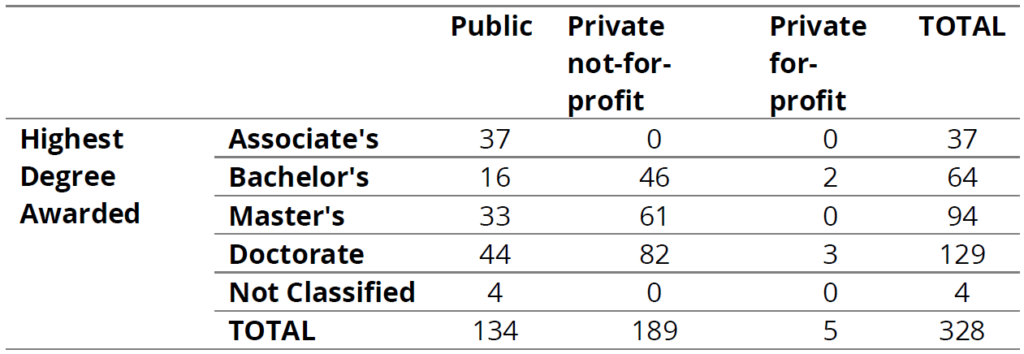
This year’s survey was completed by 328 institutions. Participants entered data manually and were given the instruction to report benefits information for regular full-time employees as of January 1, 2026 (projected if necessary).[2] Where a question does not collect information on whether benefits offerings differ by employee type (e.g., staff vs. faculty), participants entered data for the program or policy that applied to the greatest number of regular full-time employees.
The following data were collected:
General Healthcare Data
General questions consisted of the following:
- Whether healthcare plans are provided through a private health insurance exchange
- Whether the institution offers health benefits to the following and if so, whether the institution pays part of the premium:
- Staff retirees under 65
- Staff retirees over 65
- Faculty retirees under 65
- Faculty retirees over 65
- Part-time staff
- Part-time faculty
- Whether health benefits are offered to same-sex or opposite-sex domestic partners
- If a salary-based system is used to determine healthcare premiums
- Whether the institution offers healthcare or dependent care flexible spending accounts
- If the institution provides access to on-campus medical services and if yes, whether a user fee is incurred
- If the institution provides access to an on-campus fitness center and if yes, whether a user fee is incurred
- Whether healthcare coverage is offered for spouses or partners who are eligible for coverage elsewhere and if so, whether a surcharge is imposed
- Whether HR or other office manages student health insurance
Details on Healthcare Plans
For Preferred Provider Organization (PPO), Health Maintenance Organization (HMO), Point of Service (POS), and High Deductible Health (HDH) plans, the following data were collected:
- Percentage of employees enrolled in each plan offered
- Plan funding: fully-insured or self-insured
- Whether plan includes the following:
- Dental insurance
- Vision insurance
- Employee and institution monthly premium amounts, annual deductible amounts, and annual out-of-pocket maximum amounts for the following categories where offered:
- Employee only
- Employee + Spouse
- Employee + Child(ren)
- Employee + Family
- Percentage of allowable charges paid by the plan and by the employee after deductibles and co-pay for a) in-network benefits and b) out-of-network benefits
- For HDH plans only:
- Whether institution offers Health Reimbursement Arrangement
- Whether institution offers Health Savings Account
- Whether institution contributes to Health Savings Account, and amount
- Whether prescription drug plans (when offered):
- Require a co-pay
- Use a closed formulary
- Require mail order
- Provide Rx benefits for dental or dental trauma
- Cover oral contraceptives
- Cover contraceptive devices
- Cover fertility drugs
- Cover erectile dysfunction drugs
- Cover diabetic supplies
- Provide incentives for using mail order for maintenance drugs
For stand-alone dental plans, the following data were collected:
- Employee and institution monthly premium amounts, annual deductible amounts, and annual maximum plan benefit amounts for the following categories where offered:
- Employee only
- Employee + Spouse
- Employee + Child(ren)
- Employee + Family
- Details on orthodontics coverage
For stand-alone vision plans and long-term care plans, the following data were collected:
- Percentage of employees enrolled in each plan offered
- Whether the institution pays part of the premium
Wellness Programs
Institutions provided information on the following wellness-related benefits:
- Coverage for birth doulas
- Coverage for other doula services
- Gym membership
- Membership discounts
- Adoption assistance
- Pet insurance
- Legal assistance
- Critical illness insurance
- Accident insurance
- Identity theft protection
- On campus dining discounts
- Employee Assistance Program (EAP)
- Educational resources (e.g., books, online study materials, videos)
- Well-being workshops (e.g., yoga, meditation, stress management)
- Onsite counseling services (not as part of EAP)
- Virtual counseling services (not as part of EAP)
- Mental health app
Institutions designated whether they had a wellness program in place and if not, whether they had plans to develop a wellness program within the next year. Those with a wellness program in place were asked the following:
- Whether there’s a separate budget for the wellness program and if so, the budget amount
- Whether there are dedicated staff for the wellness program and if so, the staff FTE dedicated
- The area responsible for administering the wellness program
- Whether the wellness program contains the following components:
- Physical wellness education
- Physical wellness activities
- Physical wellness tracking
- Financial wellness education
- Financial wellness activities
- Financial wellness tracking
- Mental wellness education
- Mental wellness activities
- Mental wellness tracking
- Whether any of the following incentives for participating are provided:
- Discount on health insurance and if so, the percentage discount
- Financial incentive other than a health insurance discount
- Non-financial incentive
- Whether employees must do any of the following to be considered a participant in the wellness program:
- Get a wellness screening
- Take a health risk assessment
- Get a blood screening
Dependent Care
- Whether institution provides a Dependent Care Assistance Plan
- Whether institution provides employees the following:
- Childcare referral services
- Backup childcare
- Onsite childcare
- Grants, subsidies, or other funds toward childcare costs
- Amount if grants, subsidies, or other funds are provided toward childcare costs
- Whether institution provides employees the following:
- Elder care referral services
- Backup elder care
- Onsite elder care
- Grants, subsidies, or other funds toward elder care costs
- Amount if grants, subsidies, or other funds are provided toward elder care costs
- Whether institution has university-affiliated childcare on campus or in the community, including details on who owns or administers the facility
Paid Time Off (PTO)
- Whether institution provides unlimited paid time off (PTO)
- Number of paid holidays each year
- Which paid holidays are offered
- Whether institution has a formal PTO plan that combines vacation and sick leave or other benefits
- Number of PTO days
- PTO accrual limits
- Whether unused sick leave is paid upon retirement or employment separation
- Number of personal days
- Policies on emergency closures
- Details on which holidays are paid holidays
- Information on paid leave for new parents
- Information on short-term disability leave
Tuition Benefits and Student Loan Repayment Assistance
- Availability of tuition benefits for employees
- If offered to employees, minimum length of service required, number of credit hours eligible for assistance, and whether employees can attend classes during working hours
- Whether benefits are eligible for use in undergraduate or graduate courses
- Availability of tuition benefits for part-time and outside-contracted employees
- Whether tuition benefits can be used at other institutions
- Availability of tuition benefits for spouses, domestic partners, and children of full-time employees, minimum length of service required, and number of credit hours eligible for assistance
- Percentage of employees receiving tuition benefits
- Percentage of exempt vs. non-exempt employees receiving tuition benefits
- Whether institutions help employees repay student loans
Retirement
- Whether institution offers phased retirement or retirement incentive programs, and whether programs were added or expanded in response to the COVID-19 pandemic
- Number of plans available to full-time employees
- Whether more than one retirement services provider is used and how many are authorized to receive institution contributions
- Types of retirement plans offered (traditional defined benefit, cash balance, 403(b), 457(b), 401(a), 401(k))
- For each retirement plan offered: funding type (i.e., state employee plan, self-funded, or purchased insurance product), whether participation is mandatory, whether the plan is primary or supplemental, waiting period, mandatory employee contribution, institution contribution
- Primary retirement plan information: whether participation is mandatory, employer matching contribution, employer non-matching contribution, vesting period, number of loans allowed
- SECURE 2.0-related policies, such as whether institutions allow penalty-free distributions for employees who experience a qualified disaster or survive domestic abuse
Employee Experience: Flexible Work
This section collected data on flexible work arrangements including:
- Mix of full-time employees working fully on-campus, hybrid, and remote
- Details on summer policy
- Flexible schedule offerings
- Hybrid work arrangements, including which divisions can work hybrid
- Remote work arrangements, including which divisions can work remotely
- Location policies for remote workers – can they be based in any state, outside the U.S. etc.
- Whether institutions have instituted a return to campus policy since the end of the COVID pandemic, and details about policies.
Employee Experience: Performance Evaluations
- Details on staff performance evaluations, including how often they’re performed, whose feedback is included, and which tools are used
- For tenured faculty, tenure-track faculty, non-tenure-track teaching faculty, and adjunct faculty, institutions respond whether performance evaluations are conducted regularly
Employee Experience: Professional Development
Whether professional staff, faculty, both staff and faculty, or no one is provided with:
- In-house leadership program/training
- Online/offsite leadership courses/training
- In-house training on skills building (e.g., time management, communication, writing, networking)
- Online/offsite courses/training on skills building
- Professional memberships within specialty (e.g., CUPA-HR, American Psychological Association, National Association of Student Personnel Administrators)
- Travel to conferences
Institutions also provide information on how professional development is funded.
Employee Experience: Volunteer and Community Engagement
This section explores whether institutions have programs to build community on campus and with the community where the institution is located. Questions include:
- Details on Employee Resource Groups
- Paid time off for volunteering
- Volunteering policies
- Charity matching
- Whether institution offers:
- Employee appreciation day
- Employee appreciation events
- Employee awards for years of service
- Employee awards for reasons other than years of service
- Retirement celebration
- Retirement gift
- Discount access to cultural or sporting events on campus
- Free access to cultural or sporting events on campus
Employee Experience: Hiring Metrics
Institutions provide average, shortest, and longest time to fill and time to hire for the past year for the following employee types: Exempt staff (excluding faculty and employees that teach as a key part of role), non-exempt staff (excluding faculty and employees that teach as a key part of role), tenure-track faculty, non-tenure-track faculty.
Institutional Structure and Policies
- HR budget
- Details on where HR-related functions are housed
- Shared governance
- Pay periods and details
- Outsourcing
- Formal compensation strategies
- Adjunct pay policies
Institutional Basics
Basic data on institutional characteristics were collected from all participants:
- Total expenses reported to IPEDS in 2024-25
- Student enrollment (effective date approximately October 15, 2025)
- Faculty size (effective date November 1, 2025) and number of separations in the past year
- Staff size (effective date November 1, 2025) and number of separations in the past year
- Human resources staff size and number of separations in the past year
- CHRO reporting relationship
- Whether collective bargaining exists for the following groups:
- Full-time faculty
- Part-time or adjunct faculty
- Full-time staff
- Graduate students
Basic information on total expenses as well as student, faculty, and staff size were required questions. All other questions were optional.
Respondents
Respondents were largely human resources professionals from higher education institutions in the U.S. There were 328 institutions that completed the survey.
Citation Information
CUPA-HR. (2025). Benefits, Employee Experience, and Structure Survey, 2024-25 [Data set].
1 Surveys Online is a product of Peerfocus.
2 See the Benefits, Employee Experience, and Structure Survey Participation and Information Template for more detailed information about the data collected in this year’s survey, as well as the instructions provided to participants.