

What makes a team truly effective? Talent and shared goals certainly matter, but so does the ability to work through disagreements and hold one another accountable. In “The Five Dysfunctions of a Team,” Patrick Lencioni explores the common behaviors that can hold back even the most capable teams. His practical approach helps leaders build the trust and collaboration needed for their teams to succeed.
What Makes This Book Relevant to Higher Ed HR
Lencioni identifies five common dysfunctions that prevent teams from reaching their full potential:
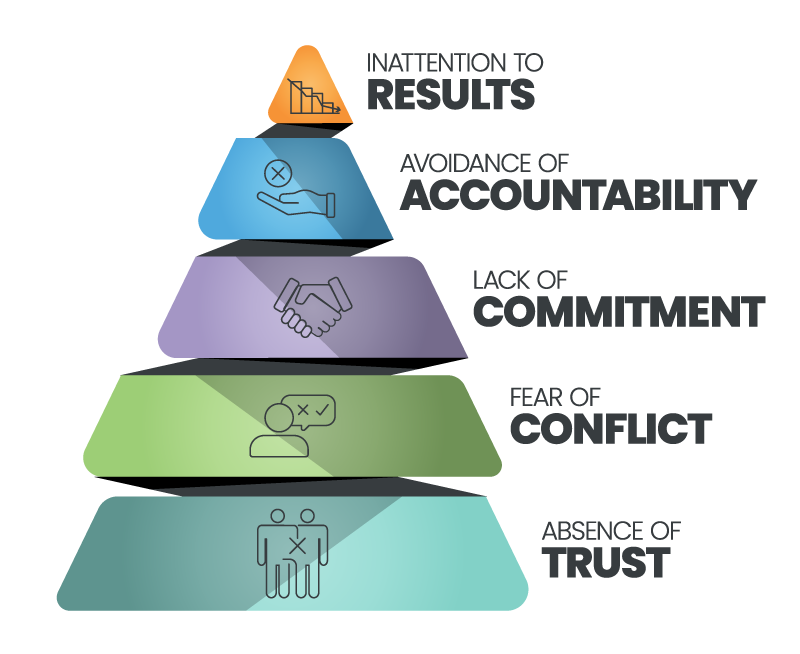
While each can affect team performance, the book emphasizes that trust is the foundation upon which everything else is built.
That message resonated with Adam Wilcock, employee development manager at Southern Utah University, who first read the book during an MBA course on effective teams. For Wilcock, one of the most valuable lessons was understanding that trust goes beyond simply believing colleagues will get their work done.
When team members feel safe expressing their thoughts and opinions without fear of judgment, they create an environment where collaboration and honest communication can thrive.
“Trust is the ability to be vulnerable with each other, to admit mistakes and weaknesses,” Wilcock explained. When team members feel safe expressing their thoughts and opinions without fear of judgment, they create an environment where collaboration and honest communication can thrive.
Embracing Healthy Conflict
Conflict isn’t necessarily a sign of a dysfunctional team. In fact, disagreements can actually lead to better ideas, stronger decisions and more productive working relationships when team members trust one another.
Wilcock admits that this perspective challenged his own approach to teamwork. He previously viewed conflict as something to avoid “like the plague,” but Lencioni’s framework helped him recognize the value of open, respectful disagreement. Rather than seeing differing opinions as obstacles, he began to see them as opportunities for growth and collaboration.
For higher ed HR professionals, this distinction is especially relevant. Whether navigating difficult workplace conversations or advising campus leaders, creating an environment where people feel comfortable speaking up can help teams address challenges before they become bigger problems.
Stronger Teams Start With Us
“We can’t change everything around us, but we can change our behaviors. Higher ed needs effective teams to lead the charge.”
Wilcock believes the lessons in “The Five Dysfunctions of a Team” are especially valuable for higher ed. By focusing on behaviors such as building trust, encouraging open communication and taking responsibility for shared goals, leaders can create stronger teams that are better equipped to navigate uncertainty.
“We can’t change everything around us, but we can change our behaviors. Higher ed needs effective teams to lead the charge,” Wilcock said.
For HR leaders, putting these ideas into practice doesn’t necessarily require sweeping organizational changes. It can begin with everyday actions, such as acknowledging mistakes, inviting different perspectives, following through on commitments and keeping the team’s shared goals at the center of decision making. Building a successful team takes intention and a willingness to grow together.
If you have a favorite book or resource you think fellow CUPA-HR members would benefit from, we’d love to hear from you. Share your recommendation or idea with us anytime at [email protected]. While we can’t feature every suggestion, we always appreciate hearing what’s inspiring and informing your work.