
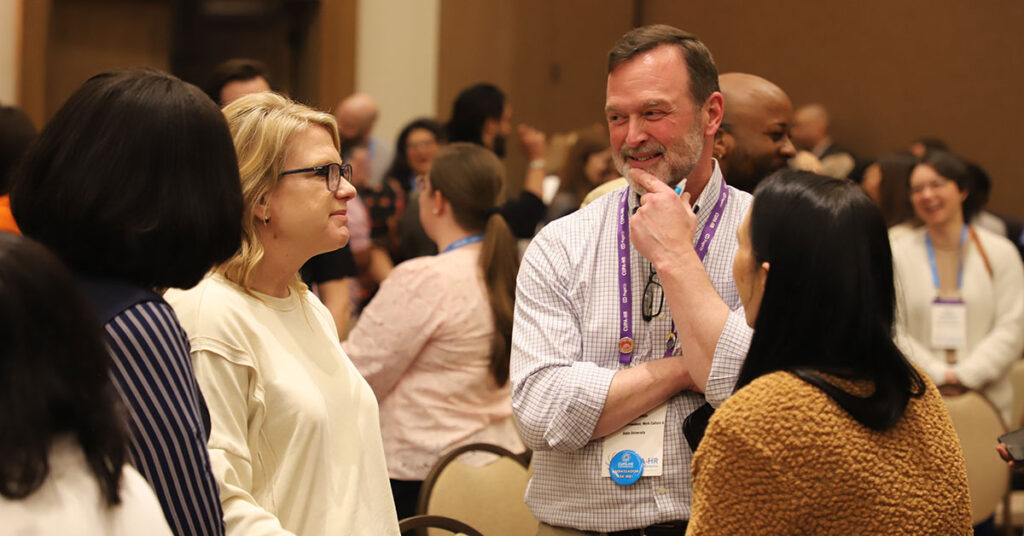
What does effective leadership look like when transformation seems constant? Across the three keynote sessions at the 2026 CUPA-HR Spring Conference in Louisville, our speakers explored how higher ed HR can respond compassionately and wisely while safeguarding their well-being over the long haul.
Leaders Are Defined by Their Character, Not a Title
Do you remember the first leader who made an impression on you? Do you remember how they made you feel? Their influence is likely still strongly felt in your life. In her opening keynote, Michelle Ray emphasized that leadership may come with a title, but a leader’s character is what matters most of all — especially in moments of massive, sustained change. How leaders make us feel is what lingers long after a crisis has passed.
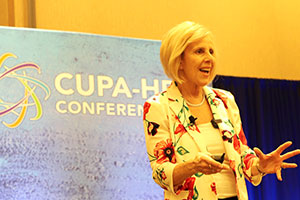
While the current moment may seem overwhelming or out of our control, Ray reminded us that we can control how we show up in work and life. “We create experiences for people by our presence, by the way we carry ourselves. Wherever you are, it’s about you realizing the influence that you have and the experience that you are creating.”
Ray challenged higher ed leaders to understand and address change as an emotional experience. To be effective, leaders must address the emotional side of change first, before moving to the logical or strategic. Fear and discomfort are natural when changing the status quo, but how leaders respond in those moments is what ultimately defines them.
Leaders Steer Us Through Complexity
Members of CUPA-HR’s government relations team, Josh Ulman and Bailey Graves, updated attendees on recent policy actions related to DEI, H-1B, and FLSA.
They recommended that HR leaders:
- Review all campus programs to ensure compliance with antidiscrimination law.
- Stay informed about new updates from the EEOC, Department of Education, and other relevant federal agencies, as well as monitor rulemaking timelines and comment periods to stay ahead of compliance deadlines.
- Engage legal counsel to evaluate workforce arrangements that may be affected as proposed rules are finalized.
They also stressed the importance of staying informed by reading CUPA-HR’s eNews (look for it in your inbox on Wednesdays) and bookmarking the latest from the government relations team.
Action to take now: The DOL has proposed increasing prevailing wage minimums across several foreign worker programs. CUPA‑HR is collecting institutional impact examples to inform its comments. Submit your examples by April 13.
Leaders Reset and Recharge for Well-Being
If staying ahead of the shifting federal landscape leaves you feeling stressed, closing keynote speaker Vijay Pendakur offered neuroscience-backed tips for thriving in a moment of constant change.
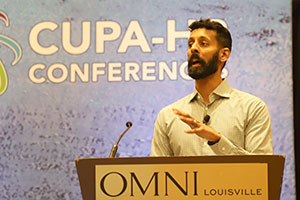
Our nervous system tries to keep us safe by kicking into fight-or-flight mode, but constantly being on high alert can keep us reactive when trying to lead from a place of calm. And while a long beach vacation helps, Pendakur says that nervous systems need daily care to sustain leadership.
Five quick nervous system resets he recommends are:
- Take a 10-minute walk (no devices!)
- Pet your cat or dog
- Stare into the middle distance
- Play one song you love (no scrolling!)
- Do a brief meditation or breathwork
A strategic approach to resetting your nervous system is protecting where your energy goes. When coaching leaders, Pendakur hears the same thing frequently: “I feel like I’m in high alert by 8 a.m.” When he asks why, many admit they’ve spent the first 45 minutes of the day doomscrolling.
As a reset, Pendakur recommends an “energy audit” by asking two questions: How important is what you’re doing, and how much control do you have over it? Often, we spend time on things we have very little control over and that aren’t very important. One simple energy management strategy he recommends is to figure out your most productive, energetic time of day and move your creative, problem-solving work to that time.